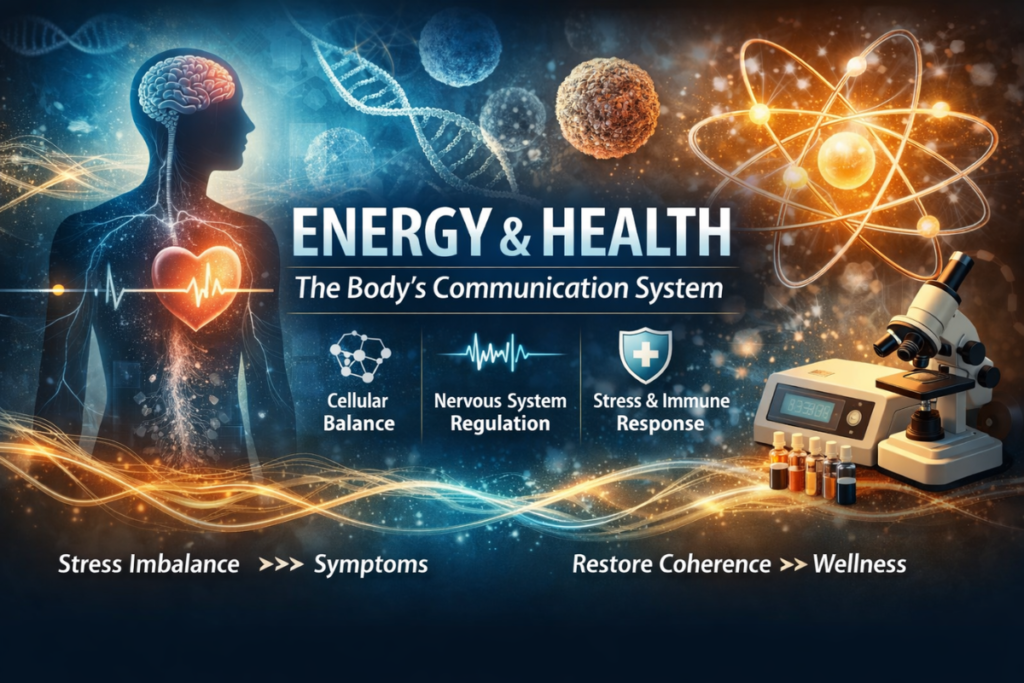
There is a growing number of individuals who share a similar experience.
They feel tired, inflamed, mentally foggy, hormonally unstable, anxious, or simply “off.” Yet when they complete standard medical laboratory tests, the results come back within normal ranges.
They are told everything looks fine.
And yet, they do not feel fine.
This disconnect can be confusing and discouraging. However, it does not necessarily mean that nothing is happening. It may simply mean that the question being asked is incomplete.
Normal Does Not Always Mean Optimal
Conventional laboratory testing is designed primarily to detect disease. It identifies significant deviations from established reference ranges.
But the body does not move from perfect health to pathology overnight.
Before disease develops, the body adapts.
Stress accumulates.
Sleep shortens.
Hormonal rhythms fluctuate.
Digestion compensates.
Inflammatory responses shift subtly.
These adaptive changes can occur long before measurable pathology appears in bloodwork.
You may fall within “normal range” — but not necessarily within balance.
The Body as an Adaptive System
The human body is not a collection of isolated organs. It is an interconnected system constantly responding to internal and external demands.
Chronic stress, emotional strain, environmental exposures, lifestyle habits, and metabolic shifts all influence how the body adapts.
Over time, these adaptive responses may present as:
• Persistent fatigue
• Hormonal irregularity
• Digestive discomfort
• Sleep disruption
• Brain fog
• Reduced stress tolerance
• Subtle inflammatory patterns
These are not always diseases.
They are signals of adaptation.
The more relevant question becomes: adaptation to what?
When Symptoms Are Signals, Not Diagnoses
Symptoms are often treated as isolated problems to suppress.
However, symptoms may represent communication.
The body communicates through:
Energy fluctuations
Nervous system reactivity
Mood variability
Sleep changes
Digestive responses
Stress sensitivity
When we look only for pathology, we may overlook the broader pattern behind these signals.
Understanding patterns provides context.
Context allows intentional response.
The Importance of Structured Insight
When symptoms persist despite normal lab results, a broader perspective may be necessary.
Rather than focusing solely on the presence or absence of disease, it can be helpful to observe how interconnected systems are adapting.
Is chronic stress influencing digestion?
Is poor sleep affecting hormonal stability?
Is emotional overload impacting energy regulation?
Clarity does not always require more aggressive testing.
Sometimes it requires a more comprehensive lens.
A structured bioenergetic assessment can offer insight into how different systems are responding and compensating, helping to identify patterns before they escalate into deeper imbalance.
Moving From Reaction to Strategy
When you understand how your body is adapting, you can begin to respond intentionally.
That response may include:
Lifestyle refinement
Stress regulation practices
Sleep optimization
Nutritional alignment
Targeted supportive technologies
Structured behavioral coaching
The goal is not to chase symptoms.
The goal is to restore coherence and stability across systems.
You Are Not Imagining It
If you feel that something is off, even though your medical tests are normal, your experience deserves thoughtful attention.
The absence of disease does not automatically mean the presence of balance.
Wellness is not simply the absence of pathology.
It is the presence of regulation, resilience, and adaptive stability.
Clarity Comes First
At The Best of Earth, meaningful change begins with structured understanding.
Before implementing supplements, programs, or protocols, it is essential to observe how your body is adapting.
Clarity transforms reaction into strategy.
And strategy builds sustainable wellbeing.
If you would like to explore how adaptive patterns may be influencing your wellbeing, you may begin with a structured bioenergetic assessment.