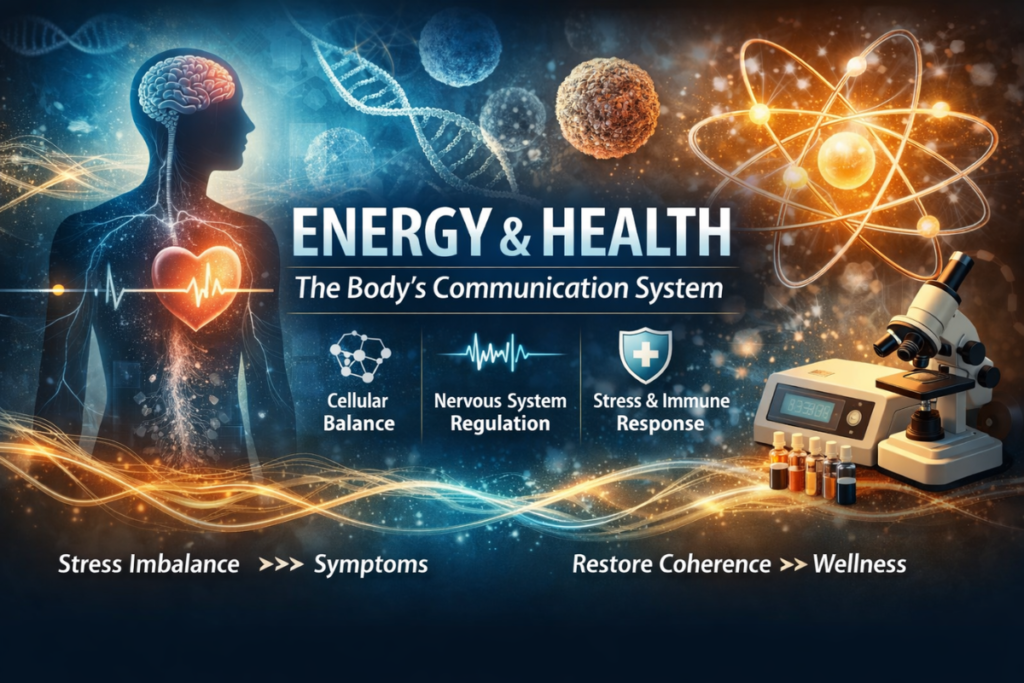
Many individuals experiencing persistent fatigue, inflammation, hormonal instability, or digestive discomfort often focus only on physical explanations.
However, emotional stress is not separate from physical health.
The body does not distinguish between “emotional” and “physical” stress. It responds to both through the same regulatory systems.
Understanding this connection is essential when symptoms persist despite normal medical tests.
The Stress Response Is Physiological
When emotional stress occurs — whether from work pressure, relationship strain, uncertainty, or internal conflict — the nervous system activates.
This activation triggers measurable physiological changes:
• Increased cortisol release
• Elevated heart rate
• Altered digestion
• Disrupted sleep patterns
• Shifts in inflammatory signaling
These responses are adaptive in the short term.
But when stress becomes chronic, adaptation can turn into dysregulation.
Chronic Emotional Stress and Systemic Adaptation
The body is designed to handle acute stress.
It is not designed to remain in prolonged activation.
When emotional tension becomes constant, the nervous system may remain in a low-grade stress state. Over time, this can influence:
• Hormonal rhythm stability
• Energy regulation
• Gut function
• Immune balance
• Sleep depth and recovery
• Cognitive clarity
These changes may not immediately appear in laboratory tests.
But they can manifest as persistent symptoms.
Emotional Regulation Is Not Suppression
Emotional regulation does not mean ignoring or suppressing feelings.
It refers to the ability to recognize emotional states, pause, and respond with awareness rather than automatic reaction.
When emotional patterns remain unprocessed or unresolved, the body often compensates physiologically.
The result may be:
• Increased muscle tension
• Digestive discomfort
• Headaches
• Hormonal fluctuations
• Sleep disruption
The body adapts to emotional patterns just as it adapts to physical demands.
Why Symptoms May Persist Even When Tests Are Normal
Standard laboratory testing is designed to detect pathology.
But emotional stress often influences regulation before it produces measurable disease.
You may fall within normal ranges and still experience:
• Chronic fatigue
• Brain fog
• Mood instability
• Increased reactivity
• Inflammatory discomfort
These symptoms may reflect adaptive strain rather than diagnosable illness.
Understanding adaptive patterns provides context.
Context allows structured interven
The Role of Structured Assessment
When emotional stress is influencing physical health, it is important to observe how interconnected systems are responding.
Rather than focusing on isolated symptoms, a broader perspective may help identify patterns of nervous system load, hormonal adaptation, and regulatory imbalance.
A structured bioenergetic assessment can provide insight into how stress-related adaptation may be affecting multiple systems simultaneously.
Clarity reduces guesswork.
tion.
Integrating Emotional and Physical Support
Addressing emotional stress in a structured way may include:
• Lifestyle coaching focused on stress regulation
• Sleep stabilization strategies
• Mind–body awareness practices
• Nutritional alignment
• Targeted supportive technologies
• Environmental habit refinement
The goal is not to eliminate stress entirely.
The goal is to restore resilience and adaptive stability.
When Emotional Stress Is Ongoing
Modern life places many individuals under continuous emotional pressure.
Professional demands.
Family responsibilities.
Uncertainty.
Internal expectations.
When emotional stress becomes normalized, the body may continue adapting quietly — until symptoms accumulate.
Recognizing this connection early allows for intentional support rather than reactive intervention.
Emotional Awareness as a Foundation for Physical Stability
Emotional balance is not separate from physical wellbeing.
It is foundational to it.
When the nervous system is regulated, the body is better able to:
• Maintain hormonal balance
• Support digestive function
• Restore energy
• Improve sleep
• Stabilize inflammatory responses
Emotional awareness strengthens physiological resilience.
Moving Toward Regulation
If emotional stress has been persistent and symptoms remain unexplained, a structured evaluation can provide a broader understanding of how adaptive patterns may be influencing your wellbeing.
Emotional strain does not make symptoms imaginary.
It makes them adaptive.
Understanding those adaptations is the first step toward restoring coherence.